

Driving lessons are paid sessions with an approved driving instructor. Most run for one or two hours. There is no set number you have to take before your test, whatever you may have read.
What you need, what happens, what it costs and how long it all takes is below. The figures come from the DVSA and GOV.UK, and they were checked on 3 August 2026.
Key facts
- Provisional licence
- £34 online, £43 by post
- Typical lesson rate
- £30 to £50 an hour, no official rate
- Minimum lessons required
- none
- Practical pass rate
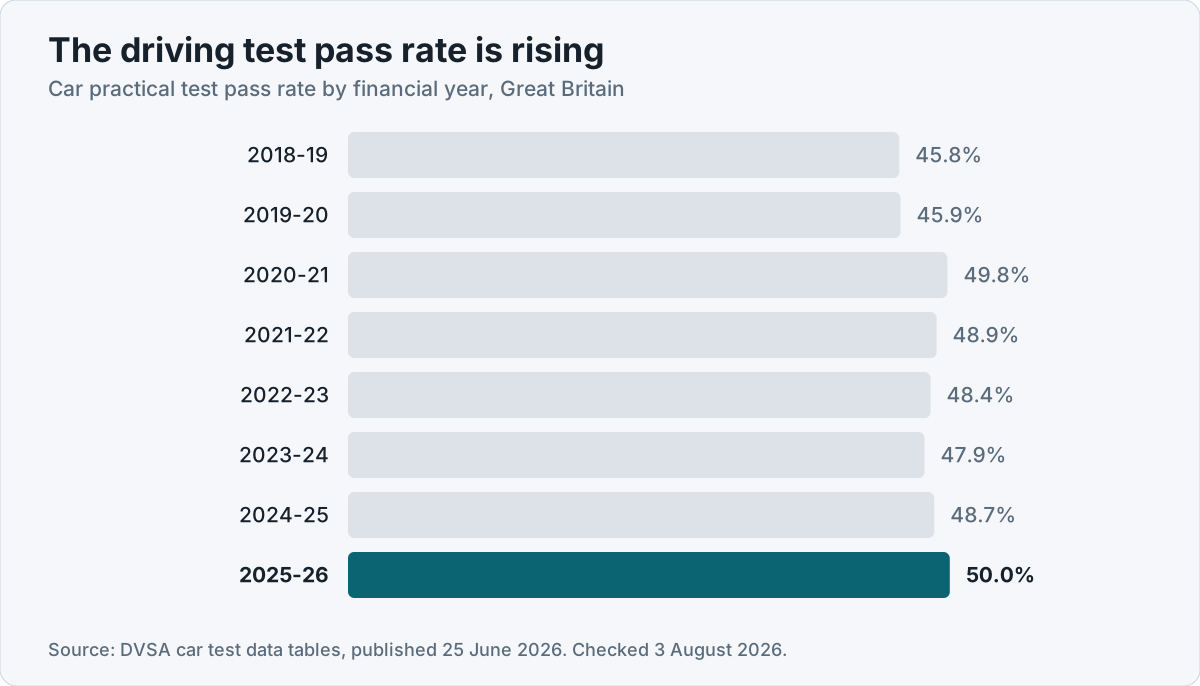
- 50.0% in the year to March 2026
What do you need before your first lesson?
A provisional driving licence. That is the only thing you must have, and you can apply for one from 15 years and 9 months old.
It costs £34 to apply on GOV.UK, or £43 by post. Apply online. The postal route costs £9 more and takes longer.
You can hold the licence at 15, but you cannot drive a car until you are 17. Plenty of people apply a couple of months early so the card is sitting in a drawer on their birthday.
You do not need to pass your theory test first. A lot of learners think they do. Theory comes before you can book the practical test, not before you can start lessons.
Bring the licence to your first lesson and nothing else. The instructor’s car already has L plates, dual controls and the right insurance. Dual controls are a second set of pedals on the passenger side, so your instructor can brake if they need to.
If you are practising in a family car instead, that car needs L plates on the front and back. Red L on white, and the right size. In Wales you can use a D plate. You can pick up 6 penalty points for not displaying one, before you have even passed.
It is also worth reading the Highway Code early. Not to revise it. Just so the signs stop being a surprise.
What happens in your first lesson?
Your instructor picks you up, drives you somewhere quiet, and shows you the controls. Then you drive. Most first lessons run for one or two hours.
There is no legal length for a lesson. An hour is the usual minimum and two hours is common. The first 20 minutes of any lesson goes on getting warm and getting somewhere useful, so the longer slot wastes less.
The first thing you will do is the cockpit drill, which is the check you run before you move: doors, seat, steering, seatbelt, mirrors. It feels fussy. Do it anyway, every time, and by lesson five you will not notice you are doing it.
After that you will move off, drive in a straight line at about 20mph, and stop. That is genuinely it. Most people spend their first lesson in second gear on a road with nothing on it.
You will stall. Everyone stalls. Your instructor has watched several hundred people stall this year and has no opinion about it. Put the clutch down, restart, carry on.
Our step-by-step guide to the first driving lesson walks through the whole two hours.
By the end you will have done maybe six or seven moving-off-and-stopping cycles and one or two junctions. It will feel like a lot happened. It will also feel like you were terrible at it, and that feeling is not information.
How do you choose a driving instructor?
Check the badge in the windscreen first. Green means a fully qualified approved driving instructor (ADI). Pink means a trainee. Then judge them on whether you can think clearly sitting next to them.
Anyone you pay to teach you must be one or the other. A trainee can legally charge you and some are very good, but they are still learning the teaching half of the job.
You can search the DVSA instructor finder, though it will not show you everyone. Instructors choose whether to be listed. If someone is not on it, ring DVSA on 0300 200 1122 with their name and ADI number and ask.
Instructors get a standards check from DVSA at least every 4 years, scored across 17 areas, and come out with a grade A or B. The finder shows the grade only if the instructor has chosen to declare it. A missing grade is not a red flag on its own.
Grade matters less than fit. Our guide to finding a driving instructor has the questions to ask and how to change if it is not working.
Ring two or three and ask what a first lesson looks like, whether they teach in two-hour blocks, and how far ahead they are booked. You will learn more from how they answer than from what they say.
From the passenger seat
Your first instructor is not a life sentence. If you are three lessons in and dreading the car, change. Most people who decide they are “bad at driving” were just badly matched with a teacher, and they never find out, because swapping feels rude.
Should you learn in a manual or an automatic?
Learn in a manual unless you are certain you will only ever drive automatics. A manual licence lets you drive both. An automatic licence only lets you drive automatics.
Instructors teach in both manual and automatic cars, so this is a choice you make before you book. Pass in an automatic and your licence stays restricted, unless you go back and sit another practical in a manual car.
The upgrade is not painful, mind. You keep driving your automatic in the meantime, and you do not sit the theory test again. Our full comparison of automatic and manual driving lessons has the pass rates, which surprise most people.
Automatics are easier. There is no clutch and no gearstick, so you have two fewer things to think about while a roundabout comes at you. Most people need fewer lessons to reach test standard.
Automatic lessons usually cost a bit more per hour. The two totals often land closer together than you would expect.
Pick automatic if you are buying an electric car, if you drive only in a city, or if the clutch is genuinely holding you back. Anxiety counts here too. A licence you actually get is worth more than a licence you keep not getting.
Pick manual if you might borrow a family car, drive a van for work, or hire a car abroad cheaply. Most cars on UK driveways are still manual.
How many driving lessons do you need?
There is no minimum. The GOV.UK guidance says it in one line: “There’s no minimum number of lessons you must have or hours you must practise driving”.
You will see “45 hours of lessons plus 22 hours of private practice” quoted everywhere as official DVSA guidance. It is not. That figure does not appear anywhere on GOV.UK, and the live guidance says the opposite. The pages repeating it are quoting each other rather than a source.
It is not a useless number. It is an average, and it is roughly the right shape. But an average is a poor guide for one person. Treat 45 as a target and you will either book lessons you do not need, or panic at lesson 30.
What actually moves your number:
- How often you drive. Weekly beats fortnightly by a distance. Two weeks off and you spend the first 20 minutes remembering.
- Private practice. Learners who mix lessons with practice in a family car get there sooner.
- Your age. Younger learners tend to need fewer hours. That is a tendency, not a rule.
- Manual or automatic. Automatic usually takes fewer.
Ask your instructor at lesson 10 where you are. A good one will tell you straight, and their estimate is worth more than any national average. We go through this properly in how many driving lessons you need.
How much do driving lessons cost?
Expect roughly £30 to £50 an hour, depending on where you live. There is no official rate. Every instructor sets their own hourly rate, so anyone quoting you a single national figure is guessing.
As of August 2026, the low end sits around £30 in parts of the north and in Wales. London and the South East run past £45, and central London further still. Automatic lessons usually carry a small premium over manual.
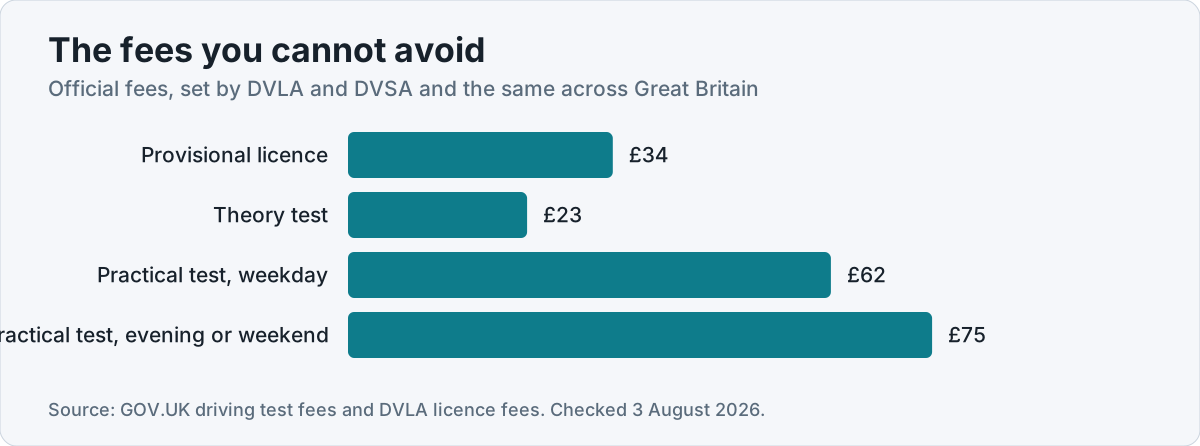
The fees around the lessons are fixed and come from DVSA:
| What | Cost |
|---|---|
| Provisional licence, online | £34 |
| Theory test | £23 |
| Practical test, weekday | £62 |
| Practical test, evening, weekend or bank holiday | £75 |
Fail the practical and you pay the full fee again. There is no retest discount. Our guide to driving test costs works a realistic total through end to end.
Our full breakdown of what driving lessons cost works a realistic total through end to end.
Block booking is worth asking about. Paying for 10 hours up front often gets you the tenth hour cheap, and most instructors offer it without advertising it.
The catch is real though: that money sits with one instructor. If you want to swap two lessons in, getting it back can be awkward. Book a block once you know you like them, not before.
One warning about the big totals you will see elsewhere. Some sites headline a figure near £11,000 for “learning to drive”. That number includes buying a car and a year of insurance.
Learning to drive is the lessons and the fees. Buying a car is a separate decision with a separate price tag.
How long does it take to learn to drive?
Most people take several months. The biggest single delay is not how fast you learn. It is the wait for a practical test.
DVSA publishes the median wait between booking a test and taking it. In June 2026 that was 10.7 weeks across Great Britain. It has been coming down: in September 2025 it was 12.4 weeks.
Where you live changes it a lot. In June 2026 the South West had a median wait of 7.0 weeks. London had 15.4 weeks. Same country, more than double the wait. We break the whole timeline down in how long it takes to learn to drive.
The theory test sits in front of all of that, and it is the part people write off too early. In the year to March 2026 the theory test pass rate was 44.8%. The practical was 50.0%. More people fail theory than fail the driving test, which is the opposite of what nearly everyone assumes. Both figures come from the DVSA test data tables, published 25 June 2026.
Your theory pass then lasts 2 years. If the practical takes longer than that, you sit the theory again and pay the £23 again.
From the passenger seat
Book your theory test in the first month of lessons, before you feel ready. You can move a booked test. You cannot invent a slot that is not there. The people who finish quickly are usually not faster learners, they just booked earlier.
What goes wrong, and what to do about it?
Three things stop most people: the money runs out, the instructor is a bad fit, or they stop for a few months and lose it. All three are fixable.
The money runs out
This is the common one, and the instinct is to cut back to one lesson a month. That costs more in the end, not less. You spend the first half of every lesson recovering ground you already paid for.
If money is tight, go to one-hour lessons weekly rather than two-hour lessons monthly. Then get every free hour you can in a family car. Private practice costs the price of the petrol and the insurance, and it is the single cheapest way to cut your lesson count.
You and your instructor do not click
Change instructor. You do not owe anyone an explanation, and a text saying you are taking a break is enough if the conversation feels hard.
Sitting in a car with someone who makes you tense is not a personality clash you should push through. You cannot learn a physical skill while braced. If you have a block booking, ask for the balance back and expect to get most of it.
You stopped, or you passed and lost your nerve
Refresher driving lessons exist for exactly this. They are normal lessons with an instructor, usually one or two of them, aimed at someone who already has some of the skill.
People take them after a long gap, after a crash, before driving abroad, or after passing and then not driving for a year. Motorway lessons are a common one, because motorways are not on the practical driving test and plenty of new drivers have never used one.
There is no shame in it and instructors do not treat it as failure. If you are learning with a disability or a health condition, driving lessons with adapted controls works through the practical side. Turning up for a refresher is the same decision as turning up for lesson one, made by someone with more sense.
Common questions about driving lessons
Do you need a provisional licence for your first driving lesson?
Yes, and it is the only thing you need. Your instructor will ask to see it before you drive. No licence, no lesson, and most instructors will still charge you for the hour.
How long is a driving lesson?
Usually one or two hours. There is no legal minimum or maximum. Two-hour lessons cost more per session but often work out better value, because less of the time goes on warming up.
Can a family member teach you to drive?
Yes, if they are over 21, have held a full licence for that type of car for 3 years, and are not paid for it. They cannot use a phone while supervising you. Some insurers want the supervisor to be over 25, so check the policy.
How many driving lessons should you have a week?
One or two is the sweet spot for most people. Weekly keeps everything fresh without emptying your account. More than two a week can work if you are aiming at a booked test date.
Is it cheaper to book driving lessons in a block?
Usually a little, yes. Ten hours paid up front often costs about the same as nine paid one at a time. Wait until you are sure about the instructor, because getting a balance refunded is harder than not paying it.
Can learner drivers go on the motorway?
Only with an approved driving instructor, in a car with dual controls, in England, Scotland or Wales. You cannot go on a motorway with a family member supervising you.
What happens if you fail your driving test?
You get a feedback sheet listing the faults, and you can rebook for a date at least 10 working days away. You pay the fee again in full. Half of everyone taking a test that day is in the same position, and most of them pass next time.
