

Driving lessons cost roughly £30 to £50 an hour in the UK. Learning to drive from scratch usually lands between £1,200 and £2,500 once the licence and the tests are in.
There is no official rate for lessons. Every instructor sets their own price, so anyone giving you one national figure is guessing. Below is what moves the number, and what the fixed fees actually are.
Key facts
- Driving lessons
- about £30 to £50 an hour
- Provisional licence
- £34 online, £43 by post
- Theory test
- £23
- Practical test
- £62 weekday, £75 evening, weekend or bank holiday
- Typical all-in total
- £1,200 to £2,500
How much does a driving lesson cost per hour?
Between about £30 and £50 an hour, depending on where you live. There is no official rate, because every instructor sets their own price.
As of August 2026, £30 to £35 is common in parts of the north, the Midlands and Wales. London and the South East sit higher, often £40 to £50, and central London goes past that.
We give a range rather than a figure on purpose. A page that says “£35 an hour” is wrong in half the country on the day it is published, and wrong everywhere within a year.
Two-hour lessons cost double a one-hour lesson. They are not double the price of the learning, because less of the time goes on getting started.
What does it cost to learn to drive in total?
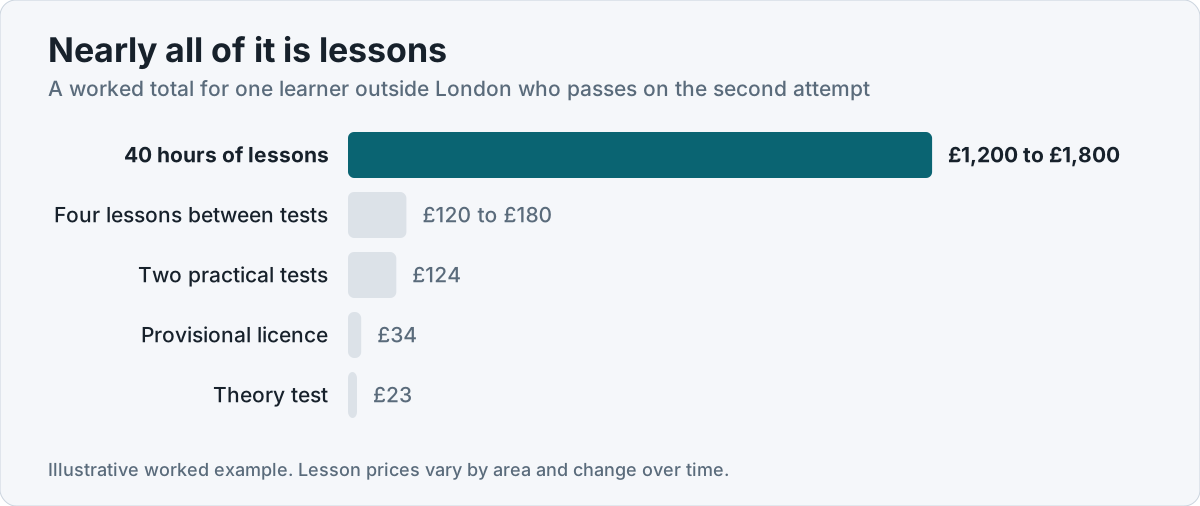
Most people spend £1,200 to £2,500 from provisional licence to full licence. Lessons are nearly all of it. The official fees add up to less than £150.
Here is a realistic run for someone outside London who passes theory first time and practical on their second go.
| Item | Cost |
|---|---|
| Provisional licence, online | £34 |
| Theory test | £23 |
| 40 hours of lessons at £35 | £1,400 |
| First practical test, weekday | £62 |
| Second practical test, weekday | £62 |
| Four lessons between tests | £140 |
| Total | £1,721 |
The same person in London, paying £45 an hour, spends closer to £2,200. Almost all of the difference is the lesson rate.
One thing to be clear about. Some sites headline a total near £11,000 for learning to drive. That number includes buying a car and a year of insurance. Buying a car is a separate decision with its own price.
What are the fixed fees you cannot avoid?
The provisional licence is £34 online, the theory test is £23, and the practical test is £62 on a weekday or £75 in the evening, at a weekend or on a bank holiday.
| Fee | Cost |
|---|---|
| First provisional driving licence, online | £34 |
| First provisional driving licence, by post | £43 |
| Car theory test | £23 |
| Car practical test, weekday | £62 |
| Car practical test, evening, weekend, bank holiday | £75 |
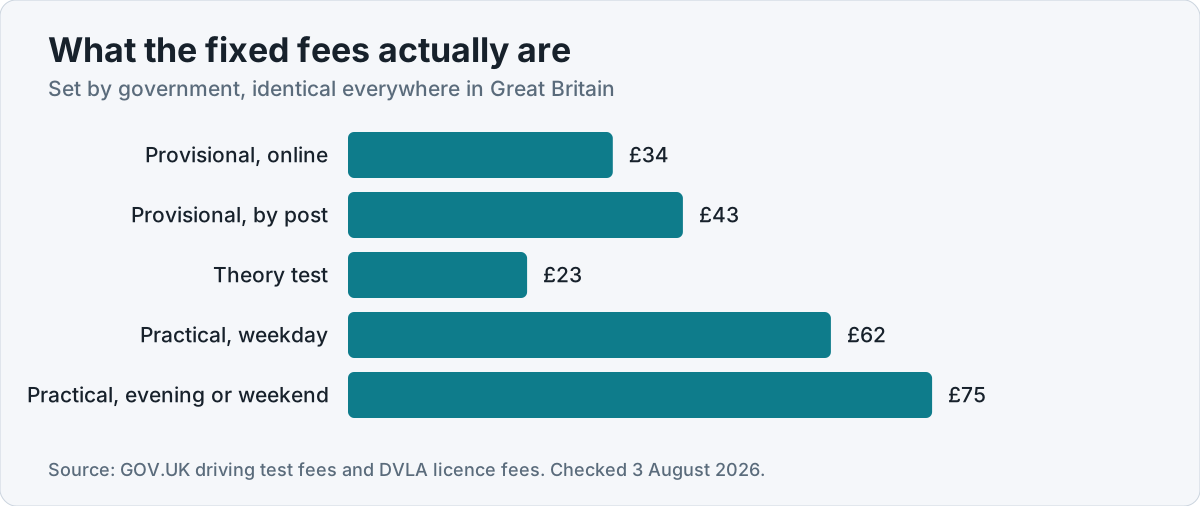
These are set by government and are the same everywhere in Great Britain, and the full DVSA fee list covers every test type. Apply for the licence on GOV.UK rather than through a third-party site, which will charge you more to fill in the same form.
Our guide to driving test costs works through the test side in more detail.
Why do driving lesson prices vary so much?
Location, mostly. After that it is the car, the instructor’s experience and how you pay.
- Where you live. A London instructor pays more for fuel, parking and insurance, and passes it on. This is the biggest factor by a distance.
- Manual or automatic. Automatic lessons usually cost a bit more per hour, because automatic cars cost more to buy and run.
- Experience and demand. An instructor with a waiting list has no reason to be the cheapest.
- Block booking. Paying up front usually knocks a pound or two off the hourly rate.
- Time of day. Some instructors charge more for evening and weekend slots, because everyone wants them.
A cheap hourly rate is not automatically a good deal. An instructor at £30 who needs 45 hours costs more than one at £38 who needs 32.
How can you spend less without learning worse?
Drive more often for less time, get free private practice, and only block book once you trust the instructor. Cutting how often you drive is the one saving that backfires.
Practise in a family car. This is the biggest saving available and it costs the petrol plus insurance. Whoever supervises you must be over 21, have held a full licence for that type of car for 3 years, and cannot be paid. Learners who mix lessons with private practice get to test standard on fewer paid hours.
Take the weekday test. A weekday practical is £62 against £75 at a weekend. That is £13 a go, and more if you retest.
Ask about block booking. Ten hours up front often costs about the same as nine paid one at a time. Wait until you are sure about the instructor. If someone is buying lessons for you, driving lesson vouchers work differently again.
Book the theory early. Not a direct saving, but a theory certificate that expires costs you £23 and a fresh round of revision.
From the passenger seat
Work out your budget in lessons, not in pounds. “I can afford one lesson a week for four months” is a plan you can hold yourself to. “I have £900” is a number that quietly becomes £1,400 without you ever noticing the moment it happened.
Here is the false economy to avoid. Dropping from weekly lessons to one a month feels like it halves the cost. It does not. You spend the first half of every lesson recovering ground you already paid for, so the total number of hours goes up. If money is tight, go shorter and keep the frequency.
What costs catch people out?
Retests, an expiring theory certificate, and hiring your instructor’s car for the test. None are huge alone, and together they add a few hundred pounds.
Retests. Fail the practical driving test and you pay the full fee again. There is no discount. Half of everyone taking a test on a given day does not pass, so budget for two goes rather than one and treat a first-time pass as a bonus.
An expired theory certificate. Your theory pass lasts 2 years from the day you sat it. Take longer than that on the practical and you sit theory again, at £23 plus the revision.
Using the instructor’s car for the test. Most learners do this and most instructors charge for the test slot plus the lesson either side. Ask what that costs before you book the test, not after.
Lessons between a fail and a retest. You have to wait at least 10 working days to sit again, and most people take two or three lessons in the gap. That is another £70 to £150.
Learner insurance for private practice. If you practise in a family car, you need cover. Adding a learner to an existing policy is sometimes free and sometimes not, and standalone learner cover is usually sold by the month. It is still far cheaper than the lessons it saves you.
Is it cheaper to learn in an automatic?
Not per hour, but sometimes overall. Automatic lessons usually cost a little more an hour, and most people need fewer of them, so the two totals often end up close.
An automatic has no clutch and no gearstick. That removes the part of learning that eats the most hours for most beginners, which is clutch control and stalling.
Set against that, a licence gained in an automatic only lets you drive automatics. If you later want to drive a manual you sit another practical driving test, though you do not redo the theory test.
Our full comparison of manual and automatic lessons has the pass rates, which are not what most people expect.
Common questions
How much is a 2 hour driving lesson?
About £60 to £100, depending on your area and your instructor’s hourly rate. Most instructors charge exactly double the one-hour price with no discount for the longer slot.
Are driving lessons cheaper if you book a block?
Usually a little. Ten hours paid up front often costs about the same as nine paid individually, so roughly 5% to 10% off. Wait until you know the instructor is right before handing over that much.
How much does it cost to learn to drive from scratch?
Most people spend £1,200 to £2,500 in total, including the provisional licence, both tests and all lessons. Where you live is the main reason for the spread.
Why are driving lessons so expensive?
You are paying for a qualified instructor, a dual-control car, its insurance, its fuel and its upkeep, plus the instructor’s time between pupils. The hourly rate is not what the instructor takes home.
Do you pay for driving lessons upfront?
Only if you block book. Most instructors let you pay per lesson, by card or bank transfer, at the start or the end. Pay-as-you-go costs slightly more per hour and keeps you free to leave.
Are automatic driving lessons more expensive?
Usually a little, because automatic cars cost more to buy and maintain. Many learners need fewer hours in an automatic, so the totals often land closer together than the hourly rates suggest.
