

To find a driving instructor, start with the DVSA finder on GOV.UK, ask anyone you know who has passed recently, then check the badge in the windscreen before your first lesson.
Anyone you pay to teach you has to register with DVSA. That part is easy to check. The harder part is working out whether you can actually learn from them, and this page is mostly about that.
Key facts
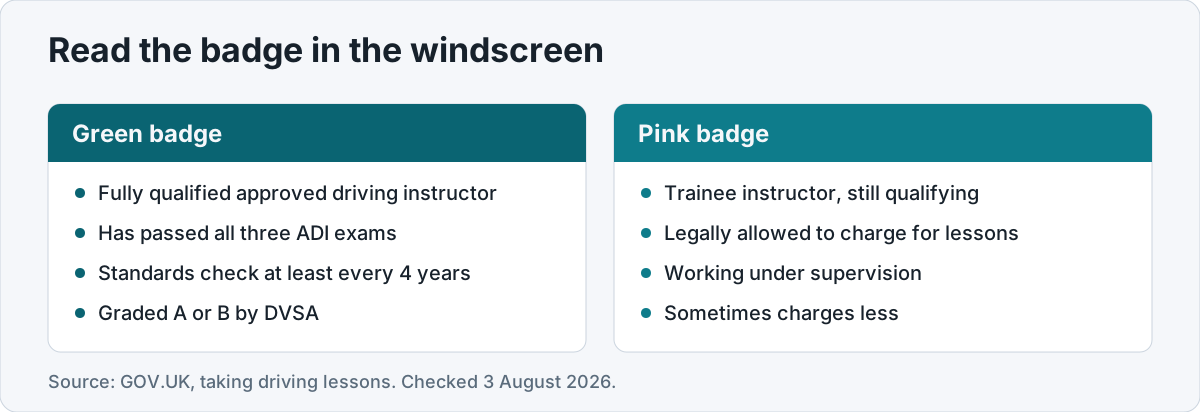
- Green windscreen badge
- fully qualified approved driving instructor (ADI)
- Pink windscreen badge
- trainee instructor, also legal to charge
- DVSA standards check
- at least every 4 years, graded A or B
- Check an instructor
- DVSA on 0300 200 1122
- Typical hourly rate for driving lessons
- £30 to £50, no official rate
How do you find a driving instructor?
Start with the DVSA instructor finder on GOV.UK, then ask anyone you know who has passed in the last year or two. Personal recommendations beat adverts.
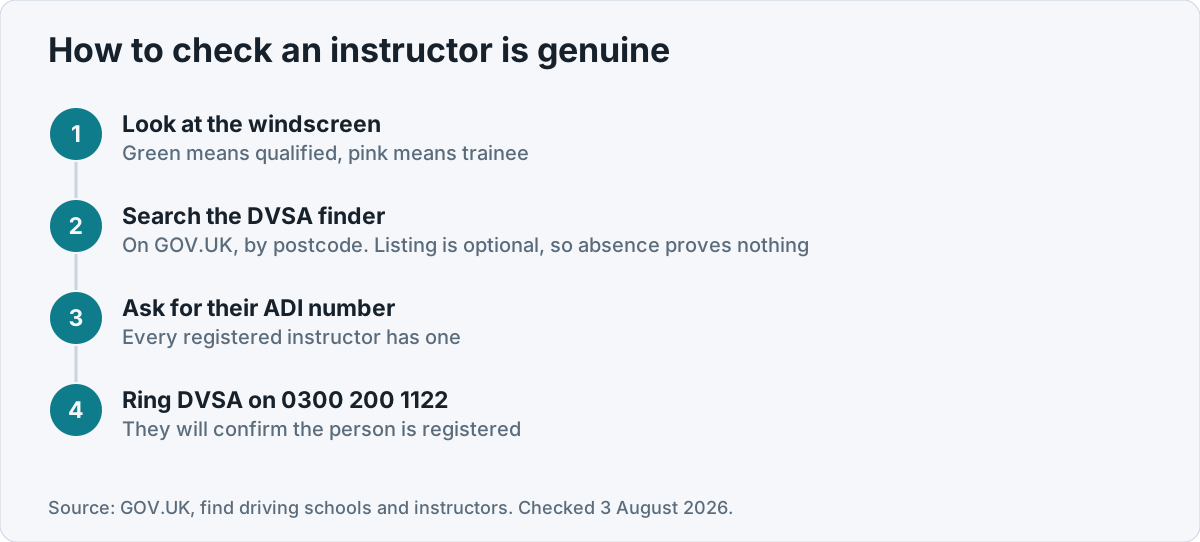
One thing the official finder does not tell you clearly: instructors choose whether to appear on it. Plenty of good, busy instructors are not listed, because they have never needed to be. A missing name is not a warning sign.
So use three routes together:
- The DVSA finder. Search by postcode. Everyone on it holds a current DVSA registration.
- People who have recently passed. They know who is patient and who is not, and they will tell you the truth.
- Local search and social pages. Look for a pattern across reviews rather than one glowing comment.
Expect the good ones to have a waiting list. An instructor with a four week waiting list is usually a better sign than one who can start you tomorrow.
How do you check an instructor is qualified?
Look at the badge in the windscreen. Green means a fully qualified approved driving instructor (ADI). Pink means a trainee. Both can legally charge you.
That badge is a requirement, not a courtesy. If there is no badge in the windscreen on your first lesson, ask why before you get in.
A pink badge is not a reason to walk away. Trainees are part-way through qualifying, a qualified instructor supervises them, and some are excellent because they are still trying hard. They also sometimes charge less. Just know which one you have.
If you want to be certain, ring DVSA on 0300 200 1122 with the instructor’s name and ADI number, or email customerservices@dvsa.gov.uk. They will confirm whether the person holds a current registration.
What do driving instructor grades mean?
DVSA watches every instructor with a standards check at least once every 4 years. Examiners score them across 17 areas and give them a grade A or a grade B.
Grade A is the higher one. Grade B is a pass and covers most working instructors. Anything below that is not a grade, it is a fail, and the instructor has to improve or leave the register.
The finder shows a grade only if the instructor has chosen to declare it. Most do not bother. A blank grade tells you nothing at all, so do not read it as a bad sign.
Honestly, grade is the least useful thing on this page. It measures how well someone taught one lesson on one day in front of an examiner. It does not measure whether they will be patient with you at a roundabout in the rain.
If you would rather be taught by a woman, our guide to finding a female driving instructor covers how, because the DVSA finder cannot be filtered by gender.
What should you ask before booking?
Ask the hourly rate, whether they teach manual or automatic, how far ahead their diary runs, and what a first lesson looks like. Then listen to how they answer.
A short list worth having in front of you on the phone:
- What is your hourly rate, and do you do two-hour lessons?
- Do you offer block booking, and what happens to unused hours if I stop?
- Do you teach in manual and automatic cars, and which car would I be in?
- How far ahead does your diary run?
- Do you pick up from home, school or work?
- Roughly how many lessons do people like me tend to need?
That last one is a good test. An instructor who gives you a confident number before meeting you is selling. One who says it depends on how often you can drive is telling the truth.
From the passenger seat
Ring them rather than texting. Two minutes of conversation tells you more about whether you can learn from someone than any review page will. If they make you feel stupid on the phone, they will do it in the car, and you will be paying £35 an hour for the privilege.
How do you know if an instructor is right for you?
You can think clearly sitting next to them. That is the whole test. If you spend the lesson braced and waiting to be told off, you are in the wrong car.
Being nervous in the first few lessons is normal and is not the same thing. What you are watching for is whether the nerves settle by lesson three or four. They should.
Some other things worth noticing early:
- They explain a thing, then let you try it, rather than talking over you while you drive.
- They tell you what went well, not only what went wrong.
- They are on time, and the car is clean and not full of someone else’s rubbish.
- You leave knowing what you are working on next.
Learning to drive is a physical skill, and you cannot learn a physical skill while you are tense. An instructor who makes you tense is not a personality clash to push through. They are a practical obstacle.
How do you change driving instructor?
Send a message, stop booking, and ask for any block-booking balance back. You do not owe anyone an explanation, and instructors are used to it.
People stay far too long with instructors who are wrong for them, because leaving feels rude. It is not rude. It is a service you are paying for, and the instructor will have had this happen before.
If you have money on a block, ask for the unused hours back in writing. Most instructors refund without fuss. If they do not, and you paid by card, your card provider may be able to help.
Two practical notes. Ask your new instructor for an assessment lesson rather than starting again at lesson one, so you do not pay twice for the same work. And if you have a test booked, tell them the date straight away.
Changing does not set you back as much as you fear. Most people who switch say the same thing afterwards, which is that they wish they had done it sooner.
Should you use a driving school or an independent instructor?
Both work, and the person in the car matters more than the badge on the roof. Schools are easier to swap within. Independents are often cheaper and always the same face.
That is a real decision with real trade-offs, so it has its own page. Our guide to choosing between a driving school or an independent instructor works through availability, price, continuity and what happens when something goes wrong.
What if there are no instructors free near you?
Widen the search, take a less popular slot, and get on more than one waiting list. Good instructors in busy areas are routinely booked three or four weeks ahead.
Weekday daytime slots are the easiest to get and the hardest for most learners to take. If you can do a Tuesday morning, say so, because that is the gap in almost every instructor’s diary.
Ask to go on a cancellation list as well as a waiting list. They are different things, and the cancellation list is the one that moves.
Do not let a wait push you into someone you have doubts about. A month waiting for the right instructor costs less than twenty hours with the wrong one.
Once you have settled on someone, booking the lesson itself is a short phone call and one piece of paperwork.
Common questions
Are all driving instructors DVSA approved?
Anyone you pay to teach you must be registered with DVSA, either as a fully qualified approved driving instructor or a trainee. Teaching for money without registering is illegal.
What is the difference between a green and pink badge?
Green means fully qualified. Pink means a trainee who is part-way through qualifying and is supervised. Both can legally charge for lessons.
Should I use a big driving school or a local instructor?
Both work, and it depends on what you value: availability and easy swapping, or continuity and a slightly lower rate. Our guide to picking a driving school or an independent instructor sets the two side by side.
Can I change driving instructor part way through?
Yes, at any point, with no notice period unless you have signed something. Ask for unused block-booking hours back and ask for an assessment lesson with the new instructor.
How far ahead should I book my first lesson?
Two to four weeks for a good instructor, longer in summer. Ring around before your 17th birthday rather than after it if you want to start straight away.
Do driving instructors teach theory as well?
Most will help with theory test questions during lessons and point you at the right apps, but they do not usually teach it as a separate paid session. The revision is yours to do.
