

Refresher driving lessons are ordinary lessons with an instructor, taken by someone who already holds a licence or already has some of the skill. Most people need one to three.
There is no separate qualification and no special course. It is the same instructor, the same car, aimed at what has gone rusty rather than at teaching you from scratch.
Key facts
- What they are
- normal lessons for someone who already drives
- How many people need
- usually 1 to 3
- Typical cost
- £30 to £50 an hour, same as standard lessons
- L plates needed
- no, if you hold a full driving licence
- Most common reason
- a long gap, or a motorway you have been avoiding
What are refresher driving lessons?
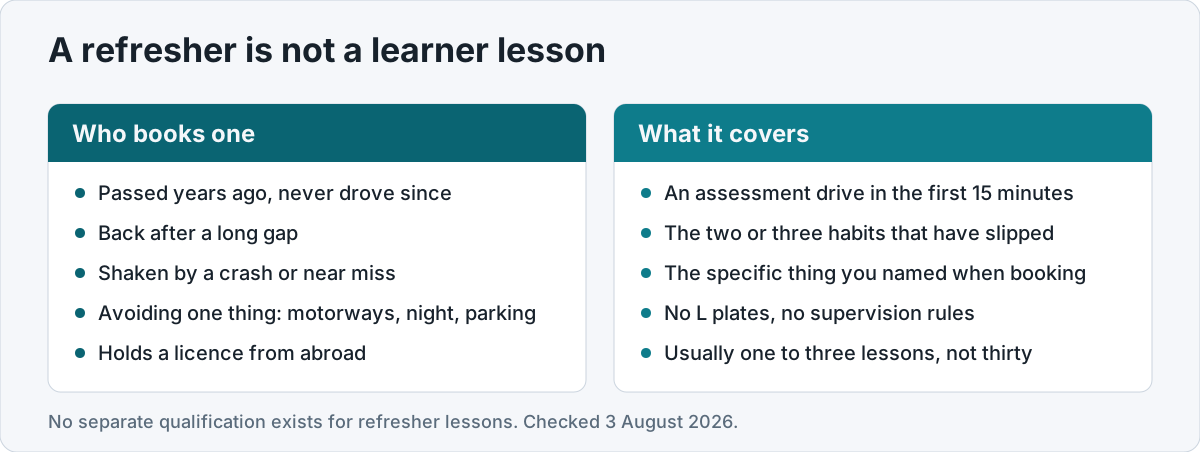
Ordinary driving lessons with an approved driving instructor (ADI), aimed at someone who already has a full driving licence or already has most of the skill. There is no separate qualification for them.
They are the same driving lessons a learner takes, priced the same way. Instructors advertise them separately because it helps people find them. In the car it is just a lesson. The instructor watches you drive, finds the two or three things that have slipped, and works on those.
If you hold a full driving licence you do not need L plates and you are not a learner. You can drive the instructor’s car, or in most cases your own, and there is no test at the end unless you want one.
The difference from a normal lesson is where it starts. Nobody is teaching you the cockpit drill. You are being watched by someone qualified to tell you which habits have drifted, which is a thing you cannot do for yourself.
Who needs refresher driving lessons?
Drivers coming back after a gap, new drivers who lost their nerve, people who have had a crash, and licence holders from abroad getting used to UK roads.
The most common groups:
- Passed but never drove. Extremely common. You passed at 18, went to university, and now you are 24 with a licence and no confidence.
- A long gap. Kids, city living, no car for a few years. The skill is still there, it has just gone quiet.
- After a crash or a near miss. Even a small one can put you off, and avoiding driving makes it worse rather than better.
- Something specific you avoid. Motorways, night driving, parking, roundabouts. Usually one named thing.
- New to UK roads. A licence from abroad, and now roundabouts and the left-hand side.
- Older drivers. Checking that everything is still fine, often before a family conversation about it.
You do not need a reason that sounds serious enough. “I want to feel less sick about driving to work” is a perfectly good reason to book an hour.
How many lessons will you need?
Usually one to three. Most people are rebuilding confidence rather than learning something new, and confidence comes back faster than skill would.
One lesson is often enough to find out you can still do it. That is genuinely the most common outcome, and instructors will tell you so rather than sell you a block.
Two or three makes sense if you are working on something specific, like motorways or parallel parking, or if the gap has been more than five years.
More than about five suggests something else is going on, usually anxiety rather than driving. That is worth naming, because an instructor who knows can pace the lessons around it.
Do not block book refresher lessons. Blocks are built for learners who need thirty hours. You probably need two.
What happens in the lesson?
You drive, and the instructor watches. They will find the habits that slipped and work on those, rather than starting again from the beginning.
Expect the first fifteen minutes to be an assessment, though it will not feel like one. Quiet roads first, then something busier once they have seen enough.
Common things that come back flagged: mirrors used less than they should be, sitting too close to the car in front, drifting wide on roundabouts, and stopping too far back at junctions. None of these are dramatic. All of them are easy to fix once somebody points them out.
Finding the right person matters as much here as it does for a learner, so our guide to choosing a driving instructor still applies. You can usually use your own car if you hold a full licence and the insurance allows it. That is often better, because it is the car you will actually be driving. Ask when you book.
The tone is different from learner lessons, and instructors know it. Nobody is going to talk to you like you are 17.
What do they cost an hour?
The same as normal lessons, roughly £30 to £50 an hour depending on where you live. Some instructors charge a little more, because refresher work is single lessons rather than blocks.
There is no official hourly rate for any driving lesson. Instructors set their own prices, so the range is a guide and not a quote. Our guide to what driving lessons cost has the full picture.
A single refresher lesson is worth pricing against what it replaces. Two hours with an instructor costs less than a hundred pounds. Not driving for another year costs you a lot more than that in taxis, lifts and jobs you did not apply for.
If you are quoted a lot more than the local going rate for “a refresher course”, ask what makes it different from a normal lesson. Usually the answer is nothing.
From the passenger seat
Tell the instructor the exact thing you are avoiding when you book. Not “I am a bit rusty”. Say “I have not driven a motorway since 2019 and I panic at the slip road”. You will get one useful lesson instead of three vague ones, and a good instructor will build the route around it.
Can you take a lesson before driving on a motorway?
Yes, and it is one of the most common reasons people book. Motorways are not on the practical driving test, so plenty of full licence holders have never driven one.
This is worth saying plainly, because people assume they are the only one. You can pass your test having never been above 60mph, never joined at a slip road, and never changed lanes at speed. The test does not cover it.
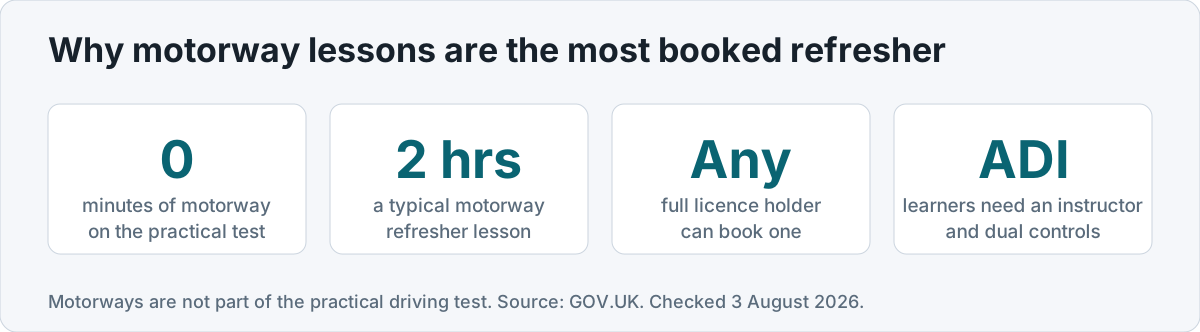
GOV.UK confirms that learner drivers can take motorway lessons, but only with an approved driving instructor in a car with dual controls, and only in England, Scotland or Wales. Many learners never do, and our guide to motorway lessons for learners makes the case for going anyway.
A motorway refresher lesson is usually two hours and covers joining, lane discipline, overtaking and leaving. Most people report the same thing afterwards, which is that it was much less frightening than the version in their head.
Pass Plus is the other option, a structured course covering motorways, night driving and country roads. It costs more than a single lesson and some insurers give a small discount for it. Ask your insurer first, because plenty no longer do.
Common questions about refresher lessons
How many refresher driving lessons do I need?
Usually one to three. One is often enough to confirm you can still drive. Book one, see how it goes, and decide afterwards rather than buying a block up front.
Can I take refresher lessons if I passed years ago?
Yes, and it is the most common reason people book them. There is no time limit and no upper gap after which you are sent back to learner status.
Do I need L plates for refresher lessons?
No, not if you hold a full driving licence. You are not a learner, so no L plates and no supervision rules apply.
Are refresher lessons more expensive than normal lessons?
Usually the same or slightly more. The small premium is because they are booked as single lessons rather than blocks, not because the lesson itself is different.
Can I have a refresher lesson in my own car?
Usually yes, if you hold a full licence and your insurance covers it. Check with both the instructor and your insurer before the lesson.
Are motorway lessons a refresher lesson?
They are the most popular kind. Motorways are not tested on the practical driving test, so a motorway lesson is new ground for many drivers rather than a refresh.
