

Take manual driving lessons unless you are sure you will only ever drive automatics. A manual licence lets you drive both. An automatic licence only lets you drive automatics.
That is the deciding fact, and everything else is a trade you can weigh afterwards. Below is what the DVSA numbers actually show, which is not what most pages on this subject tell you.
Key facts
- Manual licence
- lets you drive manual and automatic cars
- Automatic licence
- automatics only, until you pass a manual test
- Automatic share of all car tests
- 29.5% in 2025-26, up from 19.2% in 2022-23
- Practical pass rate
- 44.6% automatic, 52.3% manual, year to March 2026
- Automatic lessons
- usually cost a little more an hour
Should you take automatic or manual driving lessons?
Manual, unless you are certain you will only drive automatics. A manual licence covers both kinds of car. An automatic licence covers only automatics.
That asymmetry is the whole decision for most people. Learning manual keeps every option open, including borrowing a friend’s car, driving a van for work, or hiring something cheap abroad.
Choose automatic deliberately, not to dodge the hard bit. There are good reasons to pick it, and “I do not want to deal with the clutch” is the weakest of them, because the clutch stops being a problem after about six lessons.
The exception is genuine and growing. If you are certain your next car is electric, an automatic licence covers it, because electric cars have no gearbox.
What is the difference between automatic and manual lessons?
An automatic has no clutch pedal and no gearstick. That leaves you two fewer things to do with your hands and feet while you learn to read the road.
In a manual you learn clutch control, the biting point, gear changes, and hill starts. That is a real chunk of the early lessons, and it is where stalling comes from.
In an automatic you put it in D and drive. The car chooses the gear. Everything else is identical: the same mirrors, the same junctions, the same roundabouts, the same practical driving test with the same manoeuvres. The gearbox is the only difference.
The road-reading half is the same in both, and it is the bigger half. Nobody fails a driving test for gear changes. They fail for observations, junctions and moving off unsafely, which are the same skills in either car.
Not every driving instructor teaches both. Automatic instructors are thinner on the ground in some areas, so check availability before you commit. Our guide to what car you learn in covers the cars themselves, and the rules for the one you take to the test.
Is the automatic driving test easier?
The pass rate says no. In the year to March 2026, 44.6% of automatic car tests were passed, against 52.3% of manual ones.
Those are DVSA’s own figures, from the car test data tables.
| Test | Pass rate, year to March 2026 |
|---|---|
| Manual car practical | 52.3% |
| Automatic car practical | 44.6% |
| All car practical tests | 50.0% |
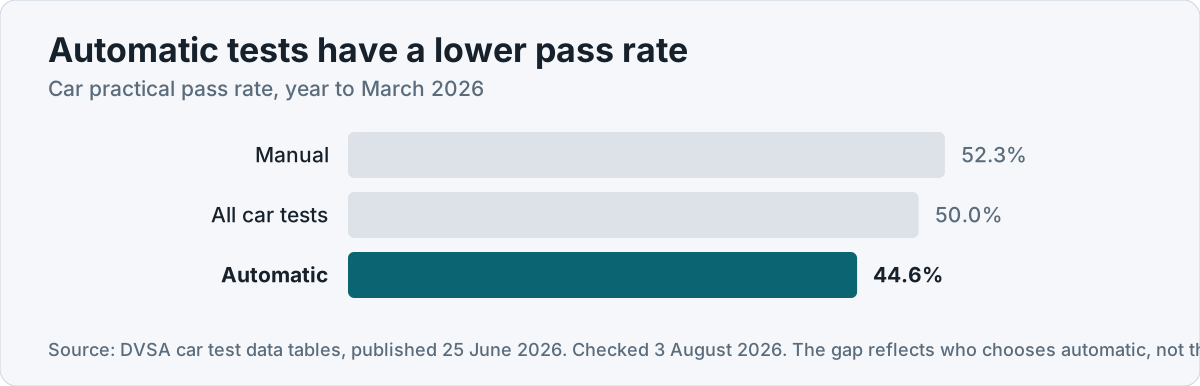
That surprises people, and it is worth being careful about what it means. The car is easier to drive. The gap is about who chooses it, not about what it does to you.
People pick automatic more often when they are anxious, older, returning after a long gap, or driving with a condition that makes a manual hard. Those are exactly the groups who find the test harder in any car. The gearbox is not the cause.
So do not read this as a reason to avoid automatic. Read it as a reason to ignore anyone claiming automatic will get you through faster. On the numbers, it does not.
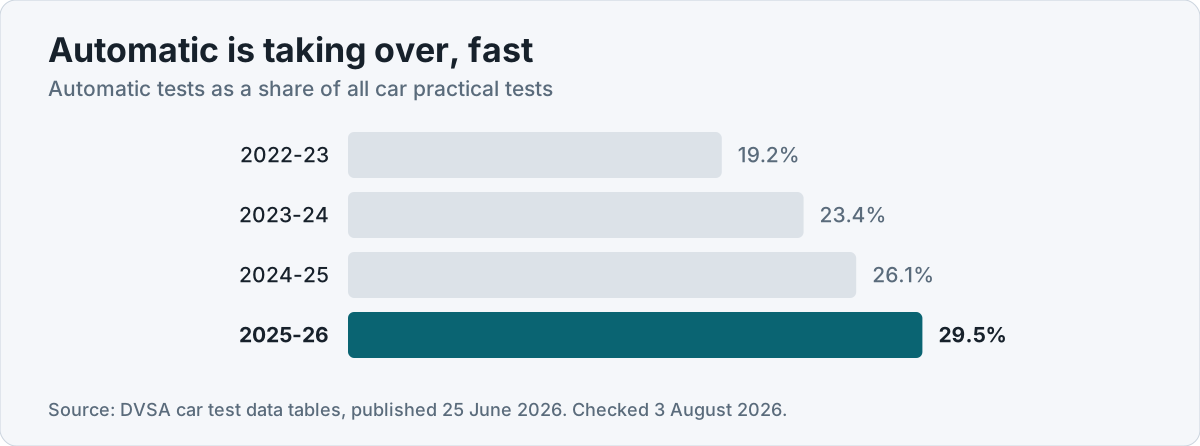
The other thing the data shows is where this is heading. Automatic tests were 19.2% of all car tests in 2022-23. In 2025-26 they were 29.5%. Nearly a third of learners now take the automatic route, and that share is climbing every year.
When should you choose automatic?
When you are buying an electric car, when you drive only in a city, or when the clutch is genuinely the thing stopping you making progress.
The honest list of good reasons:
- Your next car is electric. Electric cars have no gearbox. A manual licence buys you nothing you will use.
- City driving only. Stop-start traffic in a manual is tiring and pointless.
- Anxiety is the real obstacle. If removing two controls is what gets you driving, that is a good trade. A licence you get beats a licence you keep not getting.
- A condition affecting your left leg or coordination. Automatic exists for exactly this.
- You have stalled through fifteen lessons and hate it. Rare, but real. Switching is better than stopping.
Reasons that are not good enough on their own: automatics look easier, your friend did it, or you want to avoid stalling. Stalling is embarrassing for three lessons and then it goes.
From the passenger seat
Do not pick automatic to avoid stalling. Pick it because of the car you will actually own. For most people under 25 buying their first car in the next few years, that will be an automatic anyway, and the manual licence will sit unused. Work forward from the car, not backward from the lessons.
What do automatic and manual lessons cost?
Automatic lessons usually cost a little more an hour, and most people need fewer of them, so the totals often land closer together than the hourly rates suggest.
Automatic instructor cars cost more to buy and maintain, and there are fewer automatic instructors, so the rate follows. Expect a small premium, not a large one.
Against that, most learners reach test standard in fewer hours in an automatic, because the clutch is where a lot of early lesson time goes. Fewer hours at a slightly higher rate frequently comes out level.
There is a cost on the other side that nobody prices in. If you take an automatic licence and later need a manual, you pay for another course of lessons and another practical driving test. That is several hundred pounds, years later, at whatever rates apply then.
Our guide to what driving lessons cost has the full breakdown of both routes.
Can you switch from automatic to manual later?
Yes. Pass a practical driving test in a manual car and your full driving licence covers both. You do not sit the theory test again.
You keep driving your automatic the whole time, including while you learn the manual and even if you fail the manual test. Nothing you already hold is at risk.
Most people need a short course of lessons rather than starting over, because the road-reading half already transfers. Our guide to how many driving lessons you need applies here too. The clutch is the only genuinely new thing.
It is a real option and not a trap. But it costs money and months, and doing it once at the start is cheaper than doing it twice.
Common questions
Is it easier to pass in an automatic?
The car is easier to drive, but the pass rate is lower: 44.6% against 52.3% for manual in the year to March 2026. That reflects who chooses automatic rather than the car itself.
Can I drive a manual with an automatic licence?
No. An automatic licence restricts you to automatic cars until you pass a practical driving test in a manual. Driving a manual on an automatic licence is driving otherwise than in accordance with a licence.
Are automatic driving lessons more expensive?
Usually a little, because automatic instructor cars cost more to run and there are fewer of them. Many learners need fewer hours, so the totals often even out.
Do you need fewer lessons in an automatic?
Most people do, because clutch control and gear changes take up a lot of early lesson time. How much you save depends far more on how often you drive.
Should I learn manual if I will buy an electric car?
If you are certain about the electric car, automatic is a sensible choice, since electric cars have no gearbox. If there is any chance of a petrol or diesel car in between, learn manual.
How do I upgrade an automatic licence to manual?
Take manual driving lessons and pass a practical driving test in a manual car. There is no second theory test, and you keep driving automatics throughout.
