

Your first driving lesson lasts one to two hours. Your instructor drives you somewhere quiet, shows you the controls, then lets you move off, steer and stop.
That is the whole thing. You are not going near a roundabout, a dual carriageway or anything with a bus on it. Here is what happens, in order, so none of it is a surprise.
Key facts
- Length
- usually 1 to 2 hours
- What to bring
- your provisional driving licence
- Where you drive
- a quiet residential road, about 20mph
- Gears used
- first and second
- Will you stall
- almost certainly, and it does not matter
What do you need for your first driving lesson?
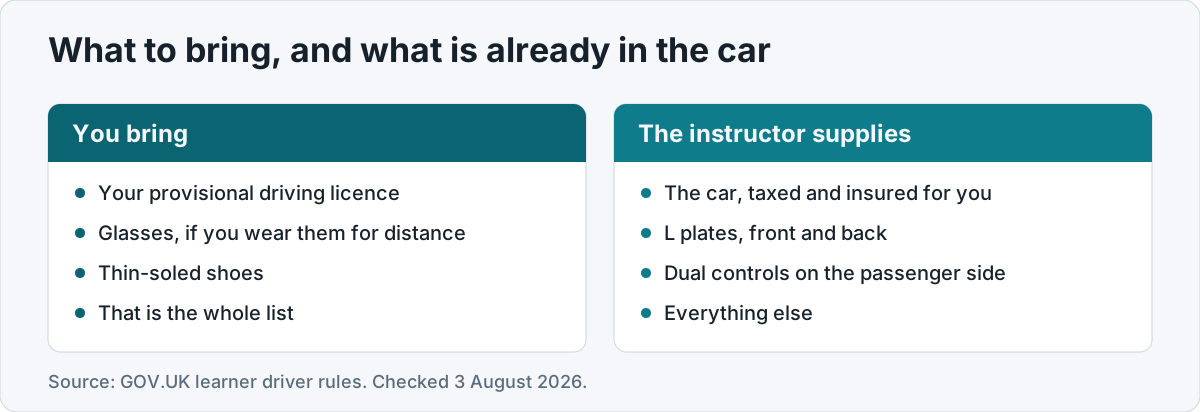
Your provisional driving licence, and glasses if you wear them for distance. That is the entire list, because the instructor’s car has everything else.
The car will already have L plates on the front and back, dual controls fitted, and insurance that covers you. Dual controls are a second set of pedals on the passenger side, so your instructor can brake or use the clutch if they need to.
You can apply for a provisional licence on GOV.UK from 15 years and 9 months old, and drive a car from 17. Your instructor will ask to see it before you drive. This is not a formality they might skip. No licence means no lesson, and most instructors will still charge you for the hour.
Wear shoes with a thin sole. Trainers are ideal. Boots, heavy soles and anything with a heel make it much harder to feel what the pedals are doing, and clutch control is hard enough already.
What happens in your first driving lesson, step by step?
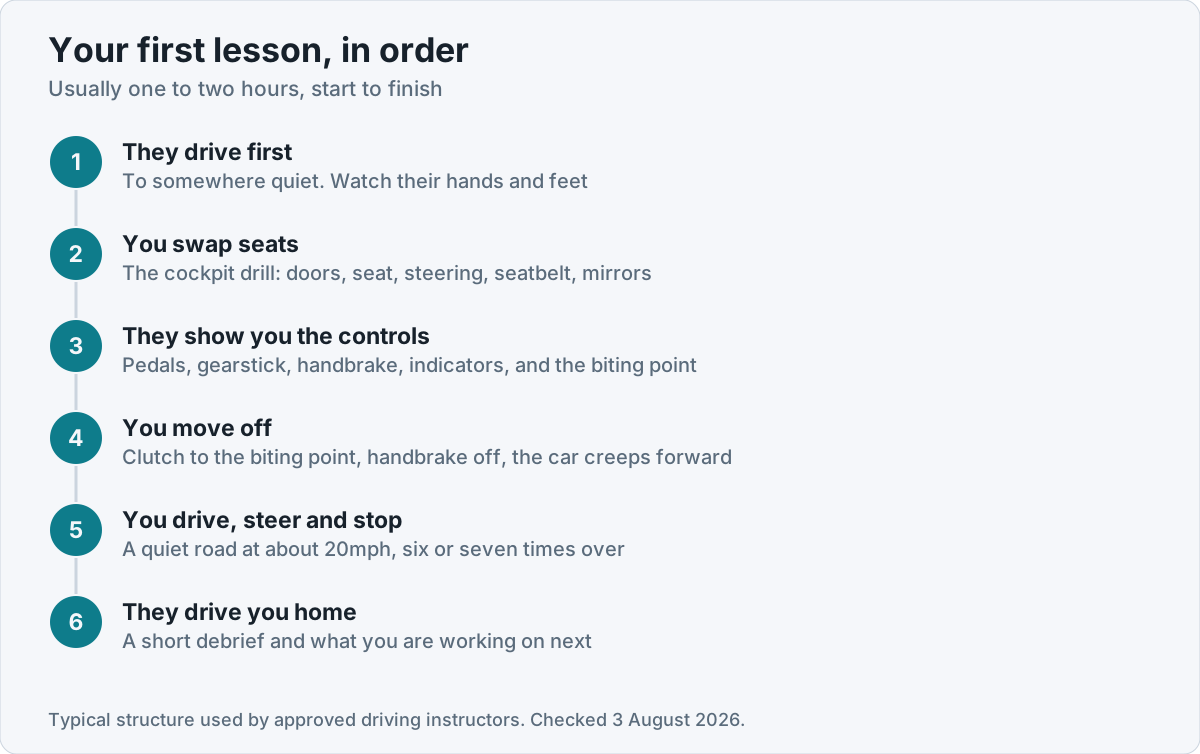
Your instructor picks you up, drives to a quiet road, swaps seats with you, then talks you through the controls before you move anywhere.
1. They drive first
Your instructor collects you from home, school or work and drives to somewhere quiet. Use this bit. Watch what their hands and feet are doing, because in ten minutes you will be doing it.
2. You swap seats and set the car up
This is the cockpit drill: doors, seat, steering, seatbelt, mirrors. Instructors shorten it to DSSSM. It feels fussy and it takes ages the first time.
Do it anyway. By lesson five you will run it in thirty seconds without thinking, and the examiner will expect it on test day.
3. They show you the controls
The pedals, the gearstick, the handbrake, the indicators. In a manual you will spend most of this on the clutch, because the clutch is the thing.
Your instructor will explain the biting point, which is where the clutch starts to grip and the car wants to move. Finding it is the single skill lesson one is really about.
4. You move off
Clutch down, first gear, a little accelerator, clutch up to the biting point, handbrake off. The car creeps forward. This is the moment people remember.
5. You drive, steer and stop
A few hundred metres of quiet road at about 20mph, then stop. Then do it again. Most first lessons are six or seven cycles of moving off and stopping, plus a couple of gentle junctions.
6. They drive you home and tell you what is next
A short debrief. What went well, what you are working on next time. Ask questions here, because this is the cheapest part of the lesson.
What goes wrong in a first driving lesson?
You will stall, ride the clutch and forget a mirror. All three are expected, none of them mean anything, and your instructor has watched several hundred people do exactly the same today.
Stalling. The engine cuts out because you lifted the clutch too fast or gave it too little accelerator. Clutch down, handbrake on, restart, carry on. Everyone stalls. People who never stall are not trying anything.
Steering too much. Beginners saw at the wheel. You will drift towards whatever you are looking at, which is why instructors keep saying look further ahead.
Forgetting the mirrors. Constantly, at first. It becomes automatic faster than you expect.
Feeling like you were terrible. This is the one nobody warns you about. Lesson one feels far worse from the driver’s seat than it looks from the passenger seat. Your instructor is not disappointed. They saw a normal first lesson.
From the passenger seat
Eat something first. Nerves plus an empty stomach plus two hours of hard concentration is how people finish lesson one shaky and convinced they cannot do it. Half the time that feeling is not the driving. It is low blood sugar.
How do you know your first lesson went well?
You moved the car and you came back. That is the entire standard for lesson one, and your instructor is not measuring anything else.
There is no pass or fail, no assessment, and nothing being written down about your potential. An approved driving instructor (ADI) is judging one thing after a first lesson, which is what to teach you next.
If you want a genuine signal, it is this: did the second half feel easier than the first? Almost always it does, and that slope is what the next few months look like.
Book the next lesson before you get out of the car. Momentum matters more than anything at this stage, and a fortnight’s gap after lesson one costs you most of what you just learned. Our guide to your second driving lesson covers what happens next.
What should you do before your second lesson?
Book it close to the first, read a little of the Highway Code, and stop replaying the stalls.
A week is ideal. Two is manageable. Longer than that and you spend lesson two recovering lesson one, which is the most expensive way to learn.
Read the Highway Code in small pieces. Not to revise for anything yet. Just so road signs stop being noise.
If you can, get a family member to take you out in their car between lessons. They must be over 21 and have held a full licence for that type of car for 3 years, and they cannot charge you. Private practice is the cheapest driving you will ever do, and it cuts how many paid driving lessons you end up needing.
Do not book your theory test yet if you are not ready, but do look at how far ahead it is running. It gates the practical test, and people routinely leave it far too late.
Common questions
Do I need my provisional licence for my first driving lesson?
Yes, and you must have the physical card or your instructor will not let you drive. It is the only legal requirement for a lesson.
Will I actually drive on my first lesson?
Yes. Almost every instructor gets you behind the wheel in the first hour, on a quiet road at low speed. You will not be driving in traffic.
How long is a first driving lesson?
One to two hours, and most instructors prefer two. There is a lot to get through before the car moves at all, so an hour goes quickly.
What should I wear for a driving lesson?
Comfortable clothes and thin-soled shoes. Avoid boots, heels and heavy soles, because you need to feel the pedals. Bring your glasses if you wear them for distance.
Is it normal to stall on your first lesson?
Completely normal, and it will happen several times. Stalling is what learning clutch control looks like from the outside. It stops within a few lessons.
Can my parent sit in on my first driving lesson?
Ask the instructor. Some allow it, many prefer not to, and most learners concentrate better without an audience. There is no rule either way.
